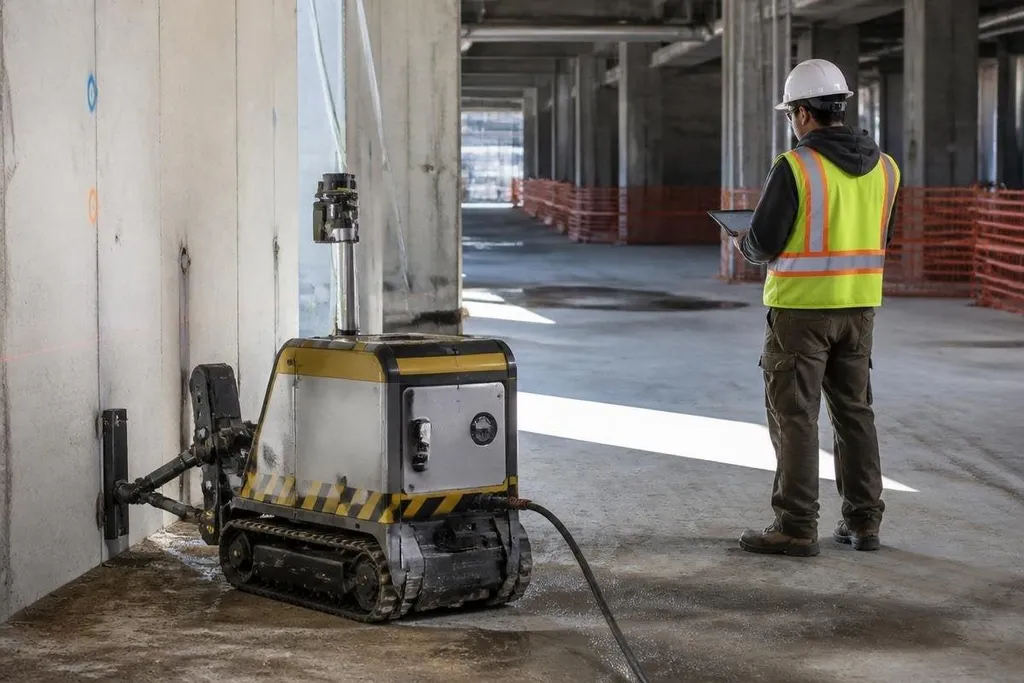
Construction robots are moving into jobs built around fixed paths, repeated measurements, or heavy loads. The change matters because these tasks consume hours on busy sites while leaving less time for skilled workers to solve problems that need judgment.
- Robots can mark layouts, move material, inspect work, or guide machines.
- Sensors and software help machines work from digital site plans.
- Human crews still set goals, check results, and handle unusual conditions.
Where robots fit on a construction site
A construction site changes every day. Ground conditions shift, materials arrive at different times, and several trades may work in the same area.
That makes full autonomy difficult, so many systems start with a narrow job and a clear operating zone.
Layout robots are one example. They use a digital plan to mark points, lines, or locations on a floor. The benefit comes from reducing repeated measuring work and giving installers a reference before they begin. A worker still checks the marks against the plan and the site.
Earthmoving equipment can also use positioning sensors and machine-control software. The system guides an excavator, grader, or similar machine toward a planned shape. It can help the operator keep the bucket or blade near the target, while the operator remains responsible for the machine and the surrounding area.
Machines, sensors, and site data
Robotics works best when the site has usable data. A building information model, often called BIM, gives teams a digital description of the building and its parts. Robots can use that information to plan a path, find a work point, or compare a scan with the intended result.
Sensors then connect the plan to the physical site. Cameras can record images, LiDAR can measure distance with laser pulses, and positioning systems can track a machine outdoors. A robot may combine these inputs to locate itself and avoid an object, but dust, poor lighting, rain, and blocked signals can still affect its work.
A robot’s limits become crew tasks on a construction site. People must clear the work area, mark safe boundaries, review the data, and step in when dust, rain, poor light, or blocked signals change the job. A report on construction robotics from Robot24.com can place those limits beside the machine, project, and task being discussed.
What changes for the workforce
Robots can reduce time spent on tiring or repetitive tasks. A machine that carries material along a set route may reduce manual trips. A scanning system can record an area without asking a worker to repeat the same measurements across a large floor.
The work does not disappear. It shifts toward planning, supervision, maintenance, quality checks, and safe coordination with machines. Workers also need to know when a robot's result requires a second check. A clean scan can still describe the wrong area if the system started from a bad reference point.
Training will matter as much as the hardware. A crew may need to read a site map, set up sensors, inspect a robot before use, and stop the system when a person enters its path. These are practical skills, and they need to fit the pace of construction work.
The limits that buyers need to price in
Construction robots often work best in controlled sections of a site. A machine designed for a flat indoor floor may struggle on loose ground. A robot that follows a planned route may need help when pallets, tools, or workers block that route.
Weather, power, network coverage, and site access also affect results. Maintenance adds another task, and software may need updates as the building plan changes. The price of a robot is only one part of the decision. Setup time, training, service, and changes to the work area count too.
I’d start with a task that repeats often and has a clear way to check the result. That gives a construction team a fair test without asking one machine to solve the whole site.
A practical buying checklist
Before a trial, check these points:
- Name the task: Write down the exact job, its start point, and its finished result.
- Map the site: Mark slopes, access routes, people zones, dust, rain, and poor signal areas.
- Set the human check: Decide who approves the robot's output and how they record errors.
- Count the extra work: Include setup, charging, cleaning, repairs, training, and software changes.
- Set a trial measure: Track time, rework, stoppages, or manual trips against the current method.
- Plan the handoff: Decide how the robot's data or work passes to the next trade.
The next useful step is a small trial with one task, one crew, and a recorded result. If the robot handles that task across changing site conditions, the case for a wider rollout becomes easier to judge.